But growing the crop was only half the work. To turn the leaf into oil, you needed a steam distillation plant, and in the town, there were perhaps three or four. The whole mint belt depended on a handful of operators. You brought your harvest, you waited your turn, and you paid for processing.
In one season, I took the harvest to one of these distillers during heavy rain. The owner was running his own crop through the still first. Mine was set aside. The rains continued. By the time the still was free, the crop had spoiled — months of work, lost in a few days of waiting.
I cycled home with my father that evening. I asked him a question.
“Can we not have our own distillation plant?”
He did not answer at once. He was a careful man with money and with words. After some time, he nodded, and that was his way of saying yes. We started the next season.
In 1984, the first plant came up on the outskirts of our small town. Over the years that followed, the number of plants grew from one to seven, spread across the mint belt's districts.
Once more plants were running, we began educating farmers about mentha, offering free distillation, and buying oil based on quality. This built trust, consistency, and lasting relationships. Eventually, nearly 2,000 acres yielded mentha, giving farmers a steady income during off-crop months.
In the late 1980s, Mentha spicata was introduced through EOAI. A small quantity of roots was received from a local businessman, and we cultivated them in our own fields. That crop still remains part of our story.
Even today, we grow Mentha arvensis, Mentha spicata,Mentha piperita, lemongrass, and palmarosa on our land. Staying closely connected to cultivation gives us a deeper understanding of the material from its origin — and that remains one of our strongest advantages in the market.
Over the years, farmers from across the belt began bringing their oil directly to me. Some have been coming for forty years. Some are the sons of the men who first came to my stills in the 1980s.
“For me, these farmers are not customers. They are family. When they come to me with their oil — that is the most fulfilling part of my work in this trade.”
Over forty-two years, approximately 25,000 tons of mentha essential oil have moved through this network — from our land, from our plants, from our farmers — to fragrance houses, flavour houses, and pharmaceutical and food manufacturers across India and beyond.
I have dealt only in naturals. That has been my discipline from the start, and it has been my strength.
When my daughter Sheetal spoke to me about Sevana — about taking what we built in Bareilly and carrying it forward to the international fragrance and flavour trade — there was one thing I asked her to hold on to.
“Be known for naturals. Never compromise on the quality of what goes into our bottles, and never forget the face of the farmer who brought that harvest to our door. This is not just a business — it is a lineage of trust.”
Forty-two years of that conviction, now entrusted to the next generation.
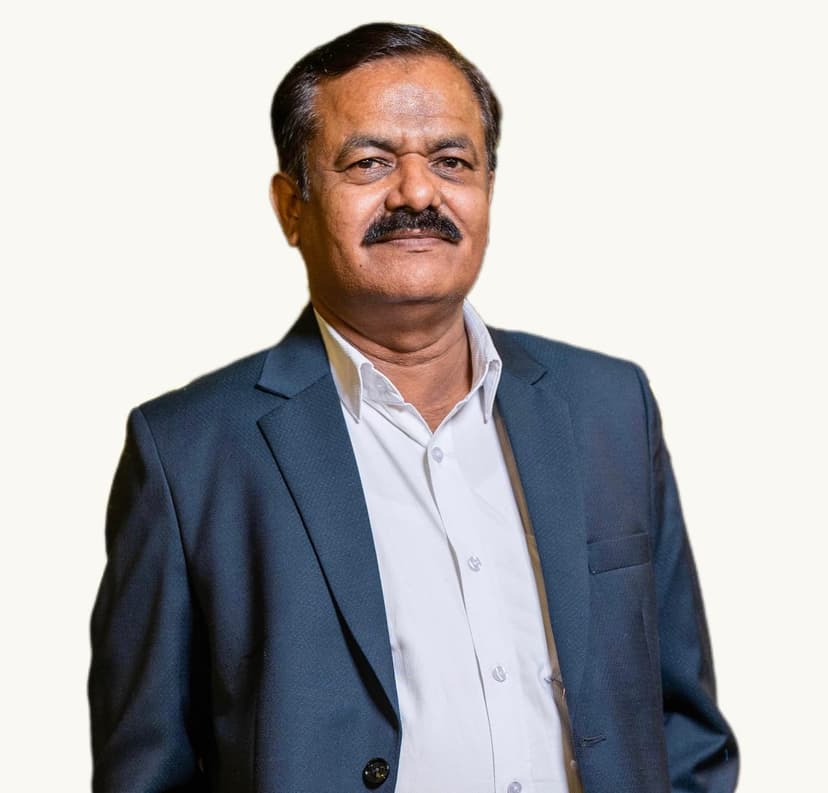
— Yadvendra Patel
Founder, Sona Chemicals · Bareilly · since 1984